





Martedì, 24 Marzo 2026

"La libertà innanzi tutto e sopra tutto"
Benedetto Croce «Il Giornale d'Italia» (10 agosto 1943)
Martedì, 24 Marzo 2026
"La libertà innanzi tutto e sopra tutto"
Benedetto Croce «Il Giornale d'Italia» (10 agosto 1943)
15 Dicembre 2025

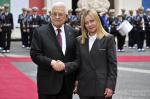
Mahmoud Abbas (Abu Mazen)
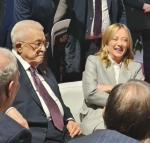
“Crimes of genocide, starvation, and systematic destruction”: this is how the President of the Palestinian National Authority, Mahmoud Abbas (Abu Mazen), described the crimes committed by Israel in the Strip, in his exclusive interview with Il Giornale d’Italia.
Among other things, the Palestinian president reiterates that “Hamas will not govern the Gaza Strip” in the post-war phase and reaffirms the centrality of the “two peoples, two States” solution. Furthermore, Abbas urges Italy to officially recognize the State of Palestine, calling it “a strategic step for peace.”
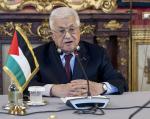
At stake, he argues, is the real possibility of a time-bound political process that would end the occupation and ensure regional stability.
Presidente Abbas, do you still believe in the coexistence between the Palestinian and Israeli peoples on the same land — through two different States? Which is your current view of the “two peoples, two States” solution? Will it ever be achieved and work?
Yes. We continue to believe that peace based on the two-State solution is the only viable and workable option: two States living side by side in security, stability, and good neighborliness, on the basis of international legitimacy. The obstacle is not the principle itself, but the systematic undermining of the two-State solution through grave violations of the legitimate rights of the Palestinian people to freedom, self-determination, and an independent Palestinian State, committed by the Israeli occupation authorities. These violations include crimes of genocide, starvation, and destruction in the Gaza Strip, continued settlement expansion, annexation of occupied Palestinian land, settler terrorism, the withholding of Palestinian revenues, and the prevention of Palestinians from living normal lives in the West Bank and East Jerusalem.
Despite this, the two-State solution remains achievable and capable of success if irreversible steps are implemented in accordance with international legitimacy resolutions, the New York Declaration, and the implementation of President Trump’s peace plan, leading to the end of the Israeli occupation, a halt to settlement activity, and the guarantee of the independence of the State of Palestine within a defined timeframe.
What kind of State do you concretely envision: borders, security guarantees, timelines, and international role?
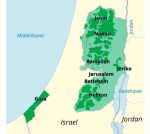
The State of Palestine on the 1967 lines, in the West Bank—including East Jerusalem as its capital—and the Gaza Strip, with territorial contiguity and full sovereignty. Since 1994, Palestinian State institutions have been established in the West Bank and Gaza Strip. In 2012, the United Nations General Assembly recognized the State of Palestine as a non-member observer State, and thereafter Palestine acceded as a full member to more than one hundred international organizations and treaties. To date, 160 States have recognized the State of Palestine, most recently France, the United Kingdom, Canada, Australia, Belgium, Portugal, Luxembourg, Spain, Ireland, Slovenia, Norway, Sweden, and others.
We are currently working on drafting a temporary constitution for the State of Palestine, as well as election and political parties laws, ensuring a modern, democratic, non-militarized State that believes in the peaceful transfer of power, political pluralism, and the guarantee of security and stability through one authority, one law, and one legitimate security force. We are open to international security guarantees, including the deployment of a UN-mandated international peacekeeping force during a transitional period to monitor and support the Palestinian police and security services, while fully respecting Palestinian sovereignty.
Most importantly, there must be a clear timetable with phased and verifiable steps toward independence: ending the occupation, withdrawing occupation forces, reconstruction, and the implementation of the two-State solution—an independent and sovereign State of Palestine with East Jerusalem as its capital on the 1967 lines, living side by side with Israel in security, peace, and good neighborliness.
The international community is calling for “credible governance” for post-war Gaza. Is the Palestinian Authority ready to govern Gaza without the support of external forces?
The Palestinian National Authority—and the institutions of the State of Palestine—are ready to assume their responsibilities in the Gaza Strip, because Gaza is an inseparable part of our land. Full implementation of President Trump’s plan and UN Security Council Resolution 2803 guarantees the presence of Palestinian governance and security institutions, as well as reconstruction efforts supported by an international stabilization force mandated by the United Nations. This force would support the transitional phase and enable our police and institutions to operate effectively—not to replace us—and would ensure implementation of the second phase of President Trump’s plan, including the handover of weapons by Hamas and other factions, the assumption of responsibility by the Palestinian police, the withdrawal of Israeli occupation forces, the protection of civilians, and an orderly transfer of authority under full Palestinian sovereignty.
Which could be the role of Hamas in the new Palestinian government? Which could be the best governance model?
Hamas, or any other Palestinian faction, will not govern the Gaza Strip. Governance and security will be under one government, one law, and one legitimate weapon. Political participation will be governed by the Palestinian transitional constitution and the political parties law, ensuring a modern, democratic, non-militarized State that believes in peaceful transfer of power, pluralism, and security through one authority, one law, and one legitimate security force. No party or individual may run in local, parliamentary, or presidential elections unless they commit to international legitimacy, international obligations, and the two-State solution based on international law, as well as the agreements signed by the State of Palestine.
What role do you assign to the United States and the European Union in the peace process? Which position do you think they should take, and what decisions should they adopt? And what conditions do you consider essential for peace?
In accordance with UN Security Council resolutions, the United States—supported by partners and mediators—must use its influence to ensure implementation, not merely mediation, by securing a permanent ceasefire, ensuring withdrawal, halting settlement expansion, and supporting a clear, time-bound process to end the occupation and achieve Palestinian independence in line with international legitimacy.
We highly appreciate the role of the European Union in adopting political positions committed to implementing the two-State solution, supporting the realization of an independent Palestinian State, upholding international law, taking practical measures to distinguish between Israel and the occupied territories, and supporting Palestinian institution-building and reconstruction.
The essential conditions are: ending the Israeli occupation; achieving a sovereign Palestinian State on the 1967 borders with East Jerusalem as its capital; protection of civilians; accountability under international law; resolving all final-status issues, including the Palestinian refugee question in accordance with international legitimacy; and ensuring that Gaza and the West Bank, including East Jerusalem, remain unified within a single Palestinian legal and institutional framework under the two-State solution, so that the two States may live side by side in security, stability, and good neighborliness.
Trump wants to turn Gaza into a Riviera. How is this viewed, and what do you think of it? Is a way to control Gaza forever?
Gaza is not a real-estate project. It is the homeland of a people with rights—foremost the right to live in dignity on their land, free from occupation and siege. Any reconstruction and development must be designed for the benefit of the people of Gaza, under Palestinian sovereignty, and within a political horizon that ends the occupation. Otherwise, it becomes a cover for control, displacement, or permanent domination. We support reconstruction, but reject any plan that bypasses Palestinian rights or treats Gaza as an object to be reshaped without its people.
What do you think about the involvement of Tony Blair in “Gaza stabilization”? Arab countries don’t agree this choice?
What matters is not individuals, but principles. Any international role must be transparent, agreed upon with legitimate Palestinian institutions and key regional partners, and consistent with international law. Gaza stabilization cannot succeed if imposed, outside international legitimacy, politically biased, or detached from Palestinian sovereignty and Arab consensus. We welcome international support that strengthens Palestinian institutions and advances implementation of the two-State solution within a defined timeframe and in accordance with international legitimacy. We reject any arrangements that create parallel governance, legitimize occupation, divide Gaza from the West Bank, or undermine the independence and sovereignty of the Palestinian State.
What do you think of the shift in relations with Italy—from the support to the Palestinian cause under the Craxi government to today’s support to Israel under the Meloni government?
Italy is a historic friend of Palestine and an important European actor. Governments change, but we believe Italy’s strategic and moral role should remain firmly anchored in international law and peace. We maintain dialogue and cooperation with the Italian government to promote peace and strengthen bilateral relations between the two friendly peoples and States. We value Italy’s humanitarian and development assistance, including support for training Palestinian security forces and European monitoring efforts.
We hope Italy will take the strategic step of recognizing the State of Palestine, joining the growing European trend—because recognition is not against anyone; it is an investment in peace and stability. We also highly appreciate the strong solidarity shown by the Italian people, who have demonstrated in support of the Palestinian people’s rights to freedom, dignity, and independence.
Why Israel is pursuing the genocide in Gaza in the silence of most of the world?
What is taking place in Gaza by the occupation forces—crimes of genocide, starvation, and systematic destruction aimed at displacement, humiliation, and collective punishment of an entire people—reflects an environment of impunity and double standards resulting from the international system’s failure to consistently enforce international law. The world must act: protect civilians, ensure unconditional humanitarian access, permanently end the war, and hold those responsible accountable through international legal mechanisms.
At the same time, we highly appreciate the positions of the majority of the world’s States that have provided humanitarian and political support, participated in the international coalition to implement the two-State solution, and contributed to convening the international conference co-chaired by Saudi Arabia and France, which led to further recognition of the State of Palestine, the issuance of the New York Declaration, and the implementation of President Trump’s plan toward self-determination and independence of the Palestinian State.
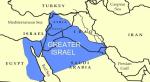
Is the project “Greater Israel” achievable?
Policies of annexation, settlement expansion, and denial of Palestinian rights are not a sustainable future; they generate perpetual conflict and isolation. No project based on occupation, land confiscation, and the entrenchment of a system of discrimination and apartheid can provide real security. The only realistic and legitimate path is the two-State solution based on international law. Attempts to impose a “Greater Israel” reality will deepen Israel’s isolation and instability and will ultimately fail in the face of the steadfastness of peoples—first and foremost the Palestinian people on their land and the land of their ancestors.
What is your opinion regarding the events of October 7 and of Hamas’s responsibility on that day? Did Israel know? Is there some involvement of Premier Netanyahu?
We were clear from the outset: we condemned the killing and kidnapping of civilians, including what Hamas carried out on October 7. This is unacceptable and violates moral and legal standards. At the same time, nothing can justify the collective punishment of an entire people, nor the killing of civilians, nor the destruction and starvation inflicted on Gaza.
As for claims regarding whether Israel had prior knowledge or whether there were internal Israeli political calculations, these matters require credible investigations and evidence. What we do know is that the aftermath was exploited to advance extremist agendas—destruction, displacement, and the undermining of the two-State solution.
In your opinion, what is Netanyahu’s real objective, and how far will he go? Do you think Netanyahu will ever be charged with war crimes? Do you believe his decisions have isolated Israel internationally or strengthened its position?
Netanyahu’s government has pursued policies that deepen occupation and conflict: expanding settlements, weakening Palestinian institutions, and using brutal force without restraint. His real objective appears to be the destruction of the two-State solution, the elimination of any political horizon, and the entrenchment of a permanent reality of domination and fragmentation. The path chosen by this Israeli government has led to Israel’s international isolation.
Which will be the consequences for Israeli people in the world in the next years following the genocide pursued in Gaza?
We do not seek harm to any people. However, the continuation of atrocities, impunity, and extremist rhetoric has consequences: it fuels polarization, fear, and tensions, and damages Israel’s image and the sense of security for many communities. The best protection for everyone—Palestinians and Israelis alike—is a just peace based on rights and international law, benefiting all the peoples and States of our region and the world.
Which goal in participating at Atreju? Which agreement to finalize with Italian Government?
Our goal in engaging in any political forum is to present the Palestinian position directly, expand dialogue with Italian society and decision-makers, and encourage Italy to play a constructive role: supporting a permanent ceasefire, reconstruction under Palestinian sovereignty, and a political process within a defined timeframe leading to the two-State solution in accordance with international legitimacy.
We seek cooperation with Italy in humanitarian assistance, institution-building, and support for international monitoring mechanisms, and above all the recognition of the State of Palestine as a strategic step for peace. Any understandings must be consistent with international law and the unity of Gaza and the West Bank, including East Jerusalem, under one Palestinian State. This participation will also provide an opportunity to meet Prime Minister Giorgia Meloni, leaders of Italian political parties represented in Parliament, and other Italian institutions.
Are there any other infos you want to share?
Yes. Our message is that Palestinians are not asking for the impossible. We are demanding what international law already affirms: freedom, sovereignty, dignity, and security—rights enjoyed by every people in the world. We reaffirm our commitment to a State of Palestine living alongside the State of Israel in security, peace, and good neighborliness, in accordance with international legitimacy.
We renew our democratic commitment to holding parliamentary and presidential elections after the war, once appropriate conditions exist; reaffirm our commitment to all promised reforms; to transparent governance; and to a unified legal system. Peace is possible—but it requires courage, accountability, respect for international law, and decisive international action to end the occupation and make the two-State solution a reality, not a slogan.
Il Giornale d'Italia è anche su Whatsapp. Clicca qui per iscriversi al canale e rimanere sempre aggiornati.
Articoli Recenti
Testata giornalistica registrata - Direttore responsabile Luca Greco - Reg. Trib. di Milano n°40 del 14/05/2020 - © 2026 - Il Giornale d'Italia