Lunedì, 09 Marzo 2026

"La libertà innanzi tutto e sopra tutto"
Benedetto Croce «Il Giornale d'Italia» (10 agosto 1943)
Lunedì, 09 Marzo 2026
"La libertà innanzi tutto e sopra tutto"
Benedetto Croce «Il Giornale d'Italia» (10 agosto 1943)
08 Marzo 2026
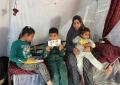
In a camp established to shelter widows and orphans, rows of tents house the wives of martyrs and their children—families who have lost both their providers and their homes. Inside these tents, mothers struggle to take on the roles of both mother and father, bearing the full responsibility of supporting their families while confronting the harsh realities of daily life.
Beyond caring for their children, these women perform exhausting tasks just to secure the most basic necessities. They fetch water, wait in long lines at community kitchens for food, and tirelessly search for ways to provide for their families despite the severe hardships they endure.
Safaa Qanouneh: Carrying Two Roles After Loss
Safaa Nabil Mahmoud Qanouneh, 27, from Al-Bureij refugee camp and the mother of several orphaned children, says her struggle began after her husband was killed.
“I used to feel that life was safe as long as my husband was with me,” she recalls. “We walked our path together. But after he was killed, my life changed suddenly. I became both the mother and the father at the same time. I never imagined I would have to walk this road alone.”
Safaa was eight months pregnant when her husband was killed. The child she was carrying—a baby girl—would never meet her father.
When heavy bombardment struck Al-Bureij, Safaa fled with her children out of fear for their lives.
“I left with my children alone and displaced to eastern Deir al-Balah,” she says. “I had no way to contact my family, and I was completely alone.”
One of the hardest moments of her life came when she went into labor.
“When it was time to give birth, I had to walk by myself from Deir al-Balah to Nuseirat because there were no cars. After giving birth, I walked back again while carrying my newborn.”
During the months that followed, Safaa endured severe hunger and scarcity. To provide milk and diapers for her newborn—items that had become extremely expensive and difficult to obtain—she worked as a cleaner in a school. At the same time, she struggled to secure medication for her son, who suffers from a medical condition requiring treatment.
After Israeli forces withdrew from the area, Safaa returned to Al-Bureij and sought shelter in Abu Hemisa School. The school was later bombed, leaving one of her sons injured.
“After the school was attacked, I moved with my children to the Widows and Orphans Camp,” she says. “I built the tent myself. I carry the water, find food for my children, and try to secure treatment for my injured son. Despite my young age, I had to take on the full responsibility and become both father and mother to my children.”
On International Women’s Day, March 8, Safaa sends a message to women around the world:
“For us in Gaza, the war has not ended. Every day we live through new loss and hunger. We hope women around the world will look at the widows of Gaza and stand with us as one hand.”
Aman Al-Mabhouh: Surviving Loss and Holding On for One Child
Aman Abdul-Hai Al-Mabhouh, 36, also from Al-Bureij refugee camp, carries another painful story.
Her home was struck during the war, killing her husband, her daughter, and one of her sons. Only one child survived.
“I came out of the bombing with serious injuries,” Aman says. “I traveled for treatment and underwent several surgeries, but I still need more.”
Her injury severely damaged her eye socket, leaving her with ongoing medical complications that require further operations.
“Only one child remained with me,” she explains. “For his sake, I found the strength to continue—to raise him, educate him, and carry on his father’s path.”
Like thousands of displaced families in Gaza, Aman moved repeatedly from one place to another.
“During the war we were displaced many times—from one area to another, from homes to schools—until we finally arrived at the Widows and Orphans Camp,” she says.
Life in the camp remains extremely difficult. Aman must manage every aspect of daily survival alone: carrying water, securing food, and caring for her child without support.
On International Women’s Day, she sends a message to Palestinian mothers:
“I salute every Palestinian mother for her resilience and patience in the face of everything she has endured. Stay strong and steadfast—for yourself and for your children.”
She also addresses women around the world:
“We hope women everywhere will look at the women of Palestine and support us. The war has not truly stopped, and the crossings remain closed. I still need medical treatment and hope to travel outside Gaza to complete my care.”
Resilience Behind the Tents
In the Widows and Orphans Camp, the stories are different, yet painfully similar. Women who have lost husbands, homes, and loved ones now shoulder the burden of survival alone. Between fragile tents and harsh living conditions, their daily struggle continues—defined by patience, endurance, and an unbreakable determination to protect their children and rebuild life from loss.
di Salma Kaddoumi
Il Giornale d'Italia è anche su Whatsapp. Clicca qui per iscriversi al canale e rimanere sempre aggiornati.
Articoli Recenti
Testata giornalistica registrata - Direttore responsabile Luca Greco - Reg. Trib. di Milano n°40 del 14/05/2020 - © 2026 - Il Giornale d'Italia