Giovedì, 12 Marzo 2026

"La libertà innanzi tutto e sopra tutto"
Benedetto Croce «Il Giornale d'Italia» (10 agosto 1943)
Giovedì, 12 Marzo 2026
"La libertà innanzi tutto e sopra tutto"
Benedetto Croce «Il Giornale d'Italia» (10 agosto 1943)
25 Febbraio 2026
Each time an end to the war is announced, the people of Gaza look around for signs of peace. Instead, they find vast destruction and the persistent hum of drones overhead.
Official statements speak of a “ceasefire,” yet the reality on the ground tells a different story: intermittent airstrikes, ongoing incursions, and a steady toll of casualties—both within and beyond what is referred to locally as the “yellow line.” It is as though the war has not ended, but merely changed form.
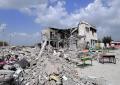
Gaza today is not simply a city scarred by conflict; it is a territory trapped in compounding crises.
The blockade remains firmly in place, restricting the movement of people and goods and deepening shortages of electricity, clean water, and medical supplies.
Hospitals that barely withstood months of bombardment continue to struggle under the weight of unrelenting emergencies.
Thousands of displaced families endure dire humanitarian conditions, sheltering amid the rubble of their homes or in overcrowded facilities lacking the most basic necessities.
Despite media narratives suggesting that military operations have ceased, the facts on the ground indicate otherwise.
Airstrikes continue sporadically, military movements persist along the periphery of the enclave, and ceasefire violations are repeatedly reported. For many residents, the war has not truly concluded; it has shifted into a prolonged phase of pressure and attrition.
Mass casualty incidents remain a recurring reality.
Only days ago, 18 Palestinians were killed in strikes targeting areas in Khan Younis, northern Gaza, and central parts of the Strip.
As this article is being written, two more people have reportedly been killed in Beit Lahia by Israeli occupation, in northern Gaza, inside a school sheltering displaced civilians who had sought safety within its walls—only to find themselves once again in the line of fire.
According to official statistics, approximately 600 people have been killed by Israel since the announcement of the ceasefire, as a result of continued violations and intermittent bombardment.
The figure underscores a stark conclusion: the ceasefire has not marked a definitive end to hostilities, but rather a fragile pause within an ongoing cycle of violence.
The so-called “yellow line,” ostensibly delineating restricted zones, has also witnessed repeated breaches and military advances, according to local accounts. These developments have reinforced perceptions that new realities are being imposed on the ground, with swaths of land effectively transformed into closed military areas and civilians pushed away from their homes and livelihoods.
Amid this, the human cost continues to mount. Nearly every household in Gaza carries a story of loss. Streets bear witness to strikes and shelling; classrooms stand roofless; families mourn loved ones who will not return.
Children who once dreamed of returning to school now attend makeshift classes without walls, while parents grapple with uncertainty that has become a constant.
Gaza is living through the aftermath of a war whose consequences remain unresolved: widespread economic devastation, soaring unemployment, collective trauma, and deep political fragmentation.
Declaring an end to the war is insufficient without a genuine lifting of the blockade, a credible reconstruction process, and binding guarantees to prevent renewed escalation.
Peace cannot be measured by the issuance of a military statement. It is measured by the silence of the skies, the rebuilding of homes, and the restoration of a sense of safety among civilians. Until that becomes reality, for many in Gaza, the war has not ended—regardless of what official declarations may claim.
Il Giornale d'Italia è anche su Whatsapp. Clicca qui per iscriversi al canale e rimanere sempre aggiornati.
Articoli Recenti
Testata giornalistica registrata - Direttore responsabile Luca Greco - Reg. Trib. di Milano n°40 del 14/05/2020 - © 2026 - Il Giornale d'Italia